
MB BS, MS, PhD, FRACS
Peter MacCallum Cancer Centre
Parkville Neurosurgery
Melbourne Private Hospital

GAMMA KNIFE
(Stereotactic Radiosurgery)
What is the Gamma Knife?
The Gamma Knife is machine that delivers radiation therapy to treat brain disorders, including brain tumours, vascular malformations, and functional disorders (such as trigeminal neuralgia). It delivers a highly focused, high-dose radiation to the target area, minimizing exposure to surrounding healthy tissue. This process is also known as Stereotactic Radiosurgery.
Radiosurgery is often used when traditional surgery is not possible or when a patient wishes to avoid the risks associated with open surgery. It is a highly effective treatment option for many conditions, with a high success rate and low risk of complications. However, it not suitable for all neurosurgical conditions.
What conditions is the Gamma Knife used to treat?
Gamma Knife can only be used to treat brain conditions. It cannot be used to treat tumours in any other part of the body.
The most common indication for Gamma Knife treatment is secondary brain cancer (or brain metastasis). We can treatment single tumours and multiple brain tumours in a single treatment session, depending on the size of the tumours.
The most common benign tumours treated with Gamma Knife are vestibular schwannomas (also known as acoustic neuromas), meningiomas, and pituitary tumours. Gamma Knife can also be used to treat brain AVMs, and trigeminal neuralgia.
How does the Gamma Knife work?
The Gamma Knife uses 192 sources of radioactive cobalt-60 to deliver high-dose radiation to targeted areas in the brain. The beams are shaped to precisely focus on the target while minimizing exposure to surrounding healthy tissue. Depending on the condition being treated, the head is held in place using either a relocatable plastic face mask, or a rigid frame attached to the skull.
How long does Gamma Knife treatment take?
Gamma Knife treatments are performed as a day procedure, with patients awake throughout. There are no incisions. Most treatments are performed in a single day, although some tumours may require up to 5 days of treatment.
What is the difference between a frame and a mask treatment?
Most Gamma Knife treatments for secondary brain cancer are done in a relocatable, thermoplastic mask. Most Gamma Knife treatments for benign tumours and brain AVMs are done in a rigid frame.
Both of these techniques effectively immobilise the head; however, the frame allows for more rigid immobilisation, which provides a more precise treatment delivery.
How is the frame applied?
If you are having a frame-based Gamma Knife treatment, you will come into Peter Mac early in the morning, and be admitted by one of our Radiotherapy nurses.
You will then be brought around to the Gamma Knife frame fitting room, where you will meet the neurosurgeon who will apply the frame.
The frame is attached by four metal pins, which are tightened onto the outer part of the skull, passing through the skin and gripping onto the bone.
In order to attach the pins, the skin at the site of insertion is numbed by injection with local anaesthetic. This stings a bit going in, but then the skin goes numb, allowing the frame to be attached. The pins need to be very tight to ensure that the frame doesn’t move for the rest of the day, and the feeling of pressure can seem pretty intense while the pins are being tightened. The tight sensation goes away once all adjustments are completed.
The frame then remains attached while you have your MRI, CT, or angiogram (depending on what is being treated). You can move your head, walk about, and even eat & drink while the frame is on and you’re waiting for your treatment to commence. During this time, the Radiation Oncology team uses special software to plan your treatment, and the physicists then check the system and plan for accuracy and safety. While you are waiting for the treatment plan to be completed, you can have something to eat & drink, read a book, watch TV, or chat with family in the dedicated Gamma Knife waiting area.
Once your treatment plan is approved, you will be taken into the Gamma Knife treatment room where you will lay down on the Gamma Knife couch and the frame will be attached to the head of the bed. You will be able to speak, and move your arms and legs, but you will not be able to move your head while the frame is secured to the Gamma Knife machine. Once all checks have been completed, the Radiation Therapists and Nurses will leave the room, and your Gamma Knife treatment will commence.
Gamma Knife treatment.
You cannot see or feel the Gamma Knife radiation. Your treatment will be monitored from a control room, linked to the treatment room by closed circuit TV cameras and audio. If you need to communicate with the Radiation Therapists, then you just need to speak up. We can play music of your choice through the speakers in the room while you are having your treatment. Most treatments will take less than an hour, although some larger tumours may require longer treatment times.
At the completion of your Gamma Knife treatment, the frame will be disconnected from the Gamma Knife bed, and you will be taken back to the frame fitting room where the frame will be removed. After a short period of observation, you will be allowed to go home.
Most people are able to return to usual activities, including work or study, within 1-2 days. The small puncture wounds at the pin sites usually heal within a week.
How can I find out more about the Gamma Knife?
The Gamma Knife is located at Peter MacCallum Cancer Centre, where I am the Neurosurgery Lead for the Victorian Gamma Knife Service. Your GP can refer you to see me at Peter Mac, or in my private rooms at Parkville Neurosurgery, to discuss whether Gamma Knife is an option for your condition.
📌 Important note: This information is general and should not replace advice from your treating neurosurgeon or radiation oncologist. Always discuss your individual situation and treatment options with your specialist team.
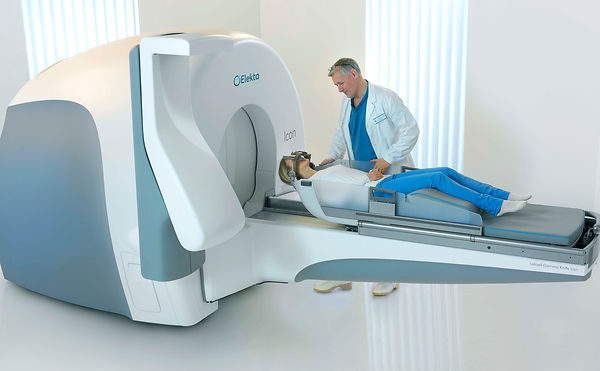
Image courtesy of Elekta